care for you
Care For You
Anthony Baussy & Tyler Eash
Sherbert Green, London, UK
22 February - 29 March 2025
Care / Climax / Offering: for Anthony and Tyler
Will Ballantyne-Reid
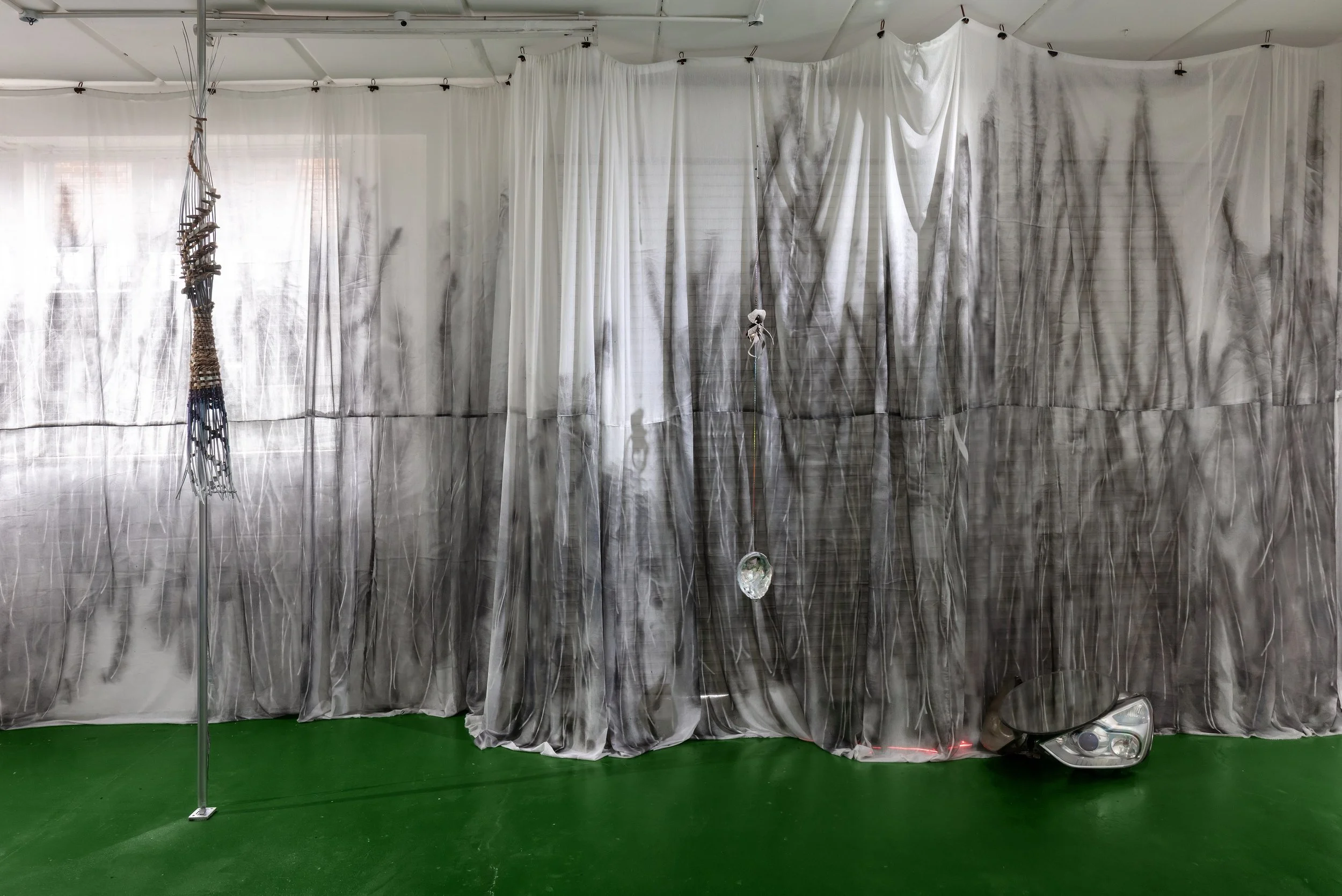
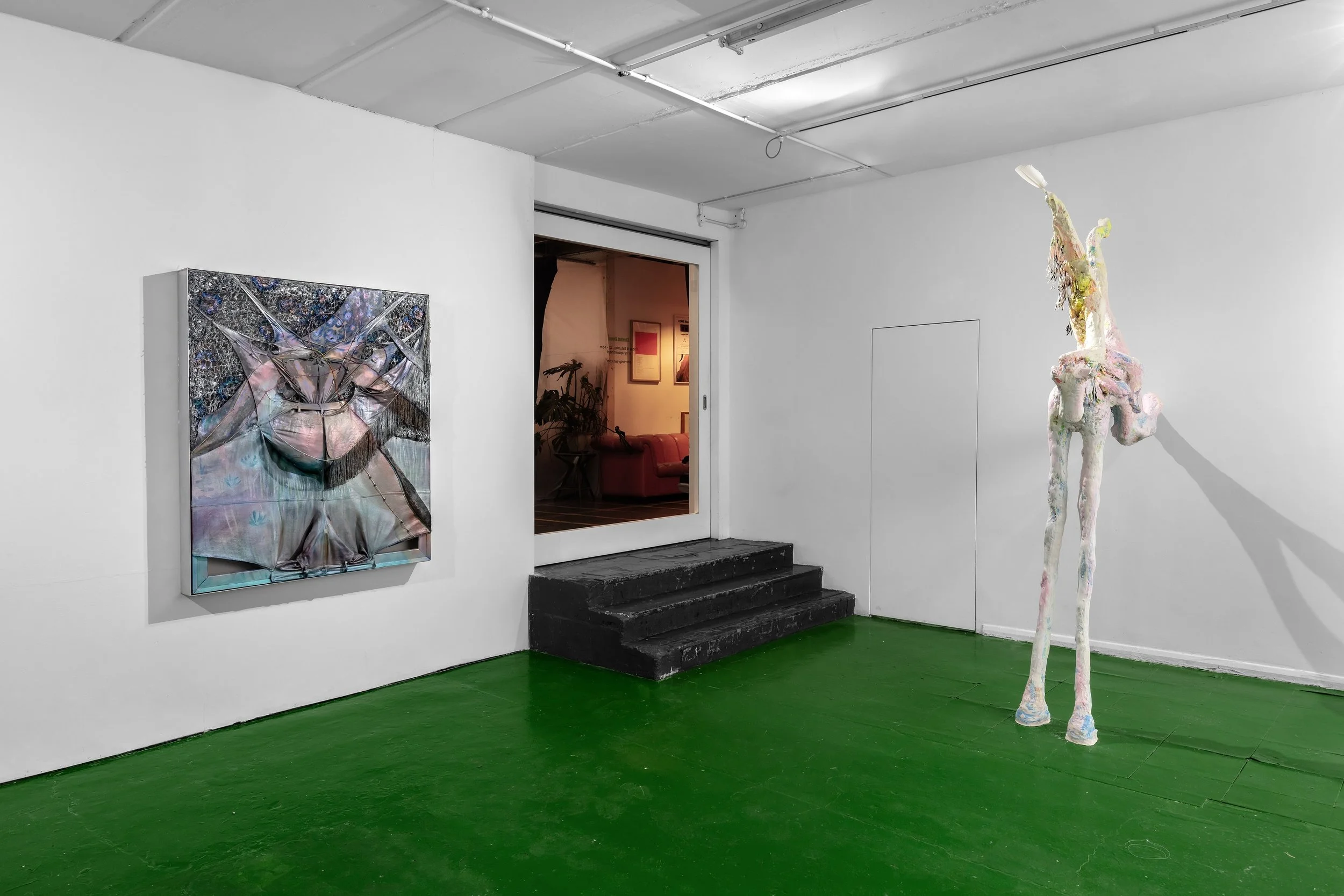
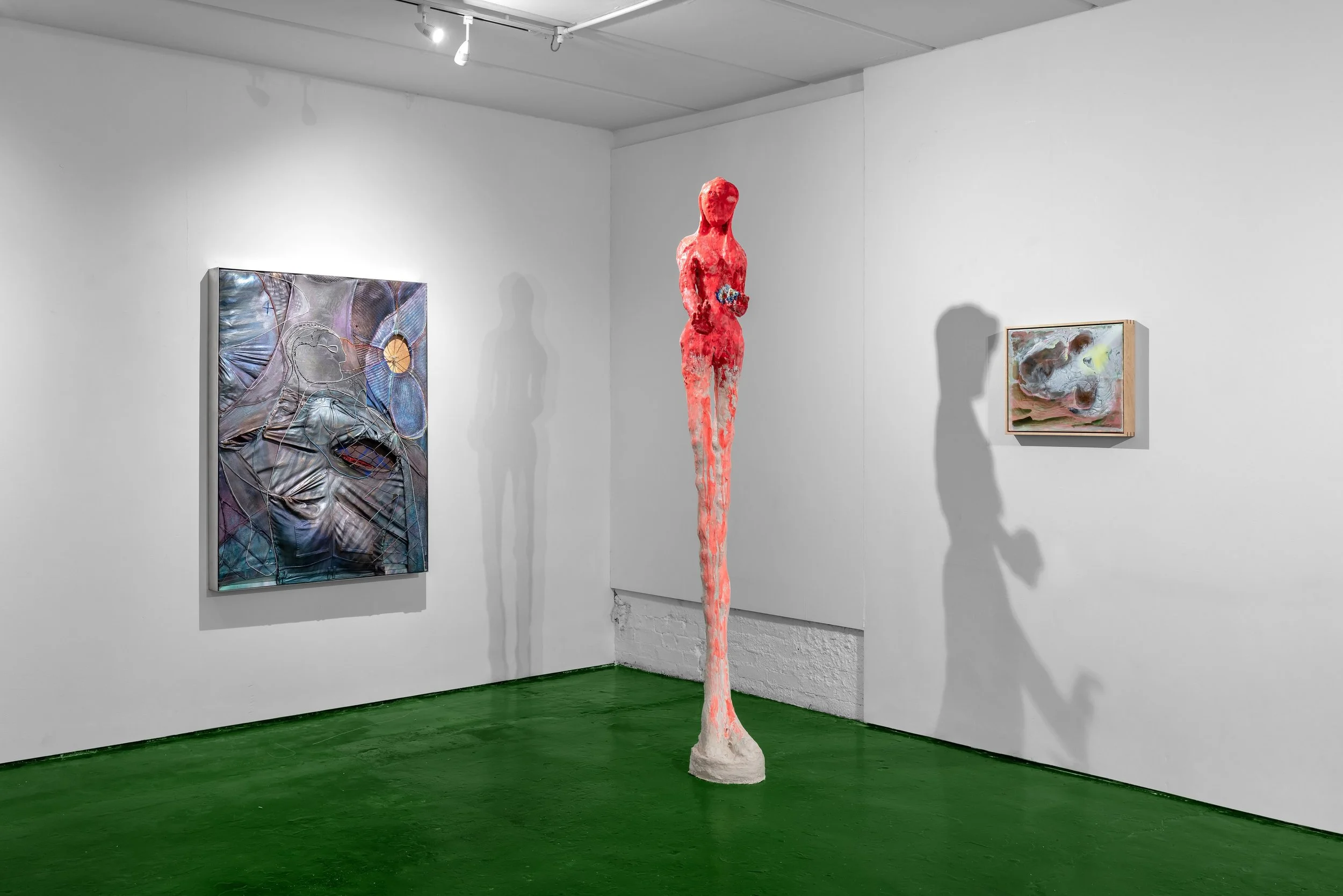
An early and essential influence in the field of queer ecologies is the writer and environmentalist Aldo Leopold, who remarked that “one of the penalties of an ecological education is that one lives alone in a world of wounds.”1 In Care for You, artists and partners Anthony Baussy and Tyler Eash provide an antidote to this loneliness. Instead, this exhibition explores how the artists make an offering of their togetherness. Perhaps the gallery becomes a garden. The viewer is invited into the embrace of this personal landscape, planted with works, symbols, references, and shared language. We are watched over by towering gods and warrior-lovers on horseback, by totems to radical faeries, by open views and quartz-like visions, by the flashing alert of a serpent – a Snake with Secret Name – tenderly keeping watch, quietly protective. We are invited to share this wilderness, to be all together in this space. In this way, the exhibition functions as its own ecosystem. An environment that is rooted upon the intertwining rhythms and creative impulses of the artists’ shared lives. Spirits that have come together, side-by-side like the technicolour beads and black freshwater pearls threaded in air or in spindly veins across metallic canvases – jointly-handled and laboriously woven. An effort of artistic exchange that permeates the soil of this show. As described by the writer Riley Black, the traditional symbol of the Tree of Life “depicts a world neatly organised by lines of progress. But the living world is much more exciting: it’s a tangled network of relationships, both biological and chosen.”2 In Care for You, both Anthony and Tyler unfurl this “tangled network” to expose and affirm a web of roots, branches, and flowering leaves that reflect years of shared experience across oceans both geographic and emotional. Both artists explore the notion of the queer being as interlocutor with the natural world. In Anthony’s paintings, ink and shellac combine in thick layers as if preserving the artist’s personal memories in fossils from the future. Elsewhere, a non-binary deity – an elongated bodhisattva in scarlet shades – proffers a lotus flower. For Tyler, iridescence becomes a visual emblem of their identity. Not only does it occur in the natural world – in the speckling of feathers, and the slick surfaces of plants, insects, and natural gemstones – but it also echoes through the Anthropocene. In oil slicks by the garage near their studio, or in formative memories of sprawling techno clubs. Replicated here with car paint, it recalls the artist’s childhood and their father’s passion for auto-repairs and car-flipping. In the context of this exhibition, in the converted space of a former Rolls-Royce factory, somehow the ecosystem of the artist’s life again coils on itself – the roots of early life feeding the flowers. In re-imagining this relationship between the queer being and the natural world, one symbol in the artists’ shared visual vocabulary is that of the fagot: a French word referring to a “bundle of sticks.” This term, emerging from pastoral landscapes and early agriculture, speaks to a member of the community who would be sent out into nature – into the wilderness – in order to return with their bundle. That the derivations of “faggot” and “bundle” still reverberate in contemporary queer culture speaks to an affective resonance that is somehow captured across the works in this exhibition. The gatherer. Abundance. To go out into the world, to survive,and to return. To hand it back. To be of service. In two of Tyler’s wall-based works, this queer bundling emerges in a different mode. Items of clothing belonging to both artists are woven together in exuberant assemblage, quite literally bursting at the seams with the titular Climax. Denim curves bulge and contort, beaded into devotion, and lacquered in that same iridescence. The pulse is found. A beat. Loud music. Ecstatic dancefloors, and the meeting of bodies somewhere in post-industrial London. Tyler speaks of leaving gaps in the work – open holes where the spirit can come in and out. Likewise, Anthony’s paintings leave space for reflection. Gaps for interpretation, for double-taking, for an offering. Like the sunrise of an early morning after, glinting into the sun through tired eyes, these canvases provide an open expanse of natural wonder at once both bending and boundless. Release your focus and what seems like a cross-section of malachite warps into a vision of two friends in heartfelt exchange by the lapping waves of a faraway beach. This is the power of the ecological: to reveal, to release, to reverberate across cultures, and to connect us not only with the ancestral but to the future. We live hopefully, together.
-
1. Aldo Leopold, Round River (New York: Oxford
University Press, 1993), 165.
2. Riley Black, “Uprooting the Tree of Life”,
Atmos, 15th November 2022, https://atmos.
earth/tree-of-life-queer-ecology-aspen-clonal.
coils on itself
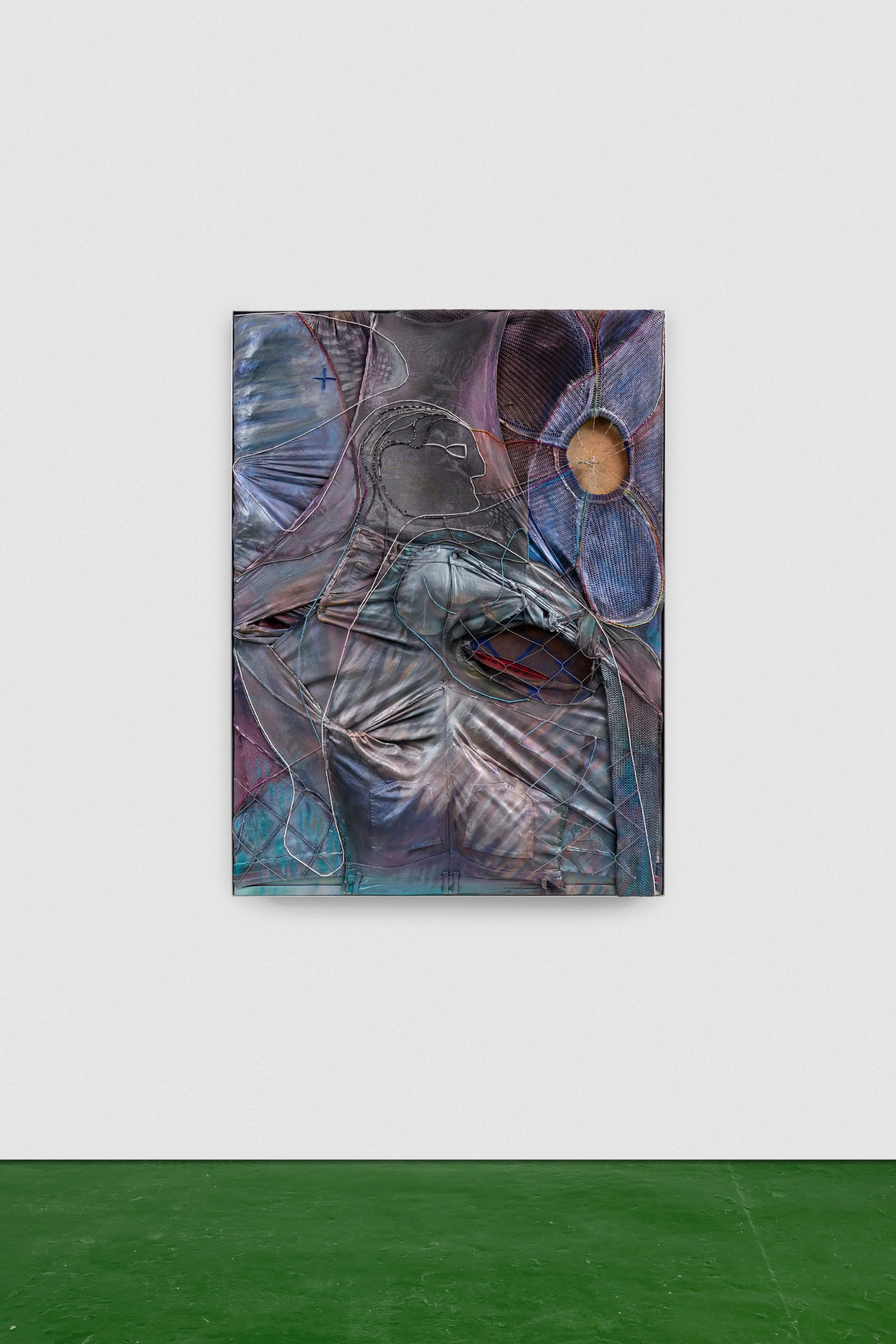
Climax 1, Tyler Eash, 2025
Jersey, denim, oil, car paint, glass seed beads, and black freshwater pearl, Framed in aluminium
142 x 105 x 10 cm
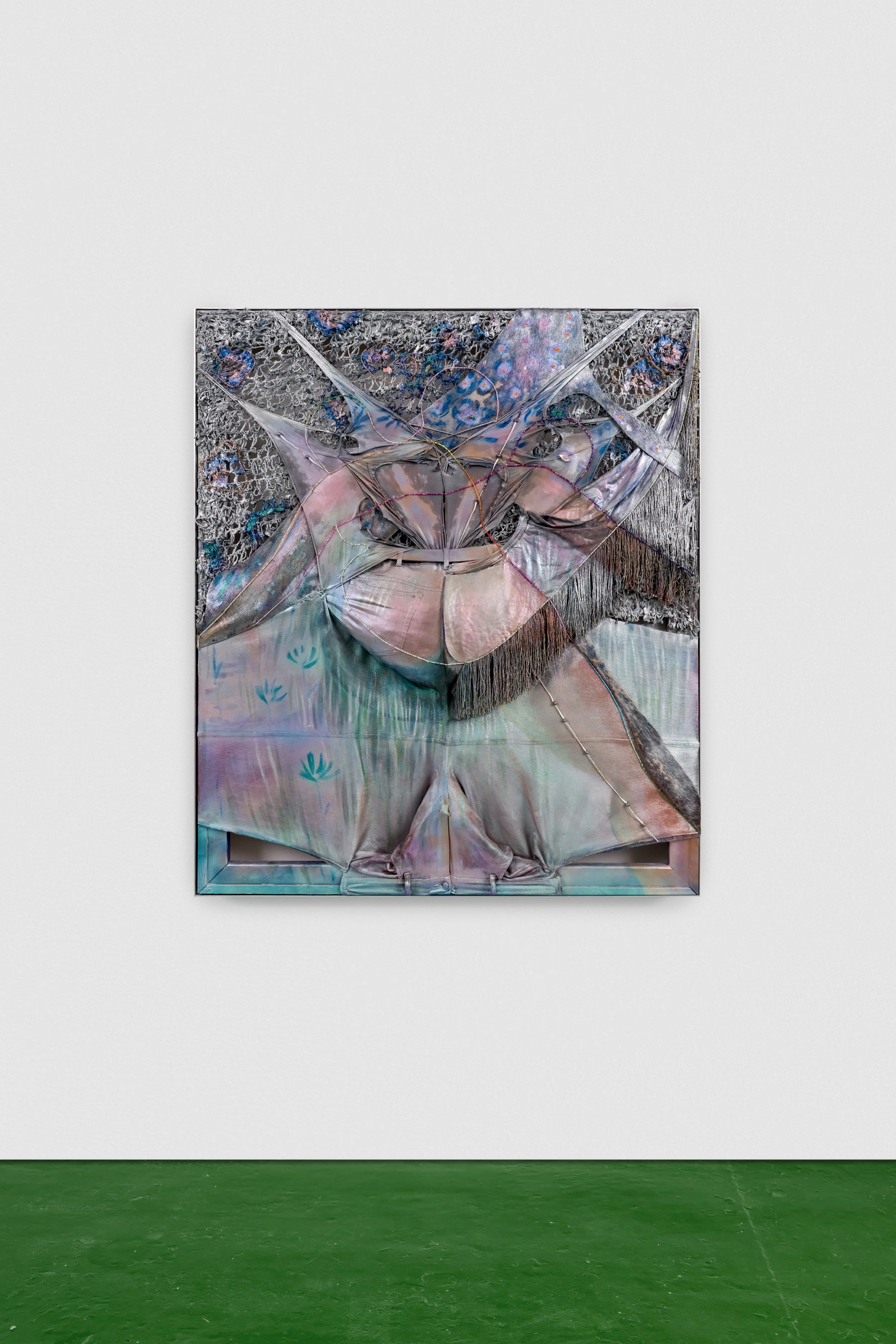
Climax 2, Tyler Eash, 2025
Jersey, denim, oil, car paint, glass seed beads, and black freshwater pearl, Framed in aluminium
141 x 121 x 10 cm
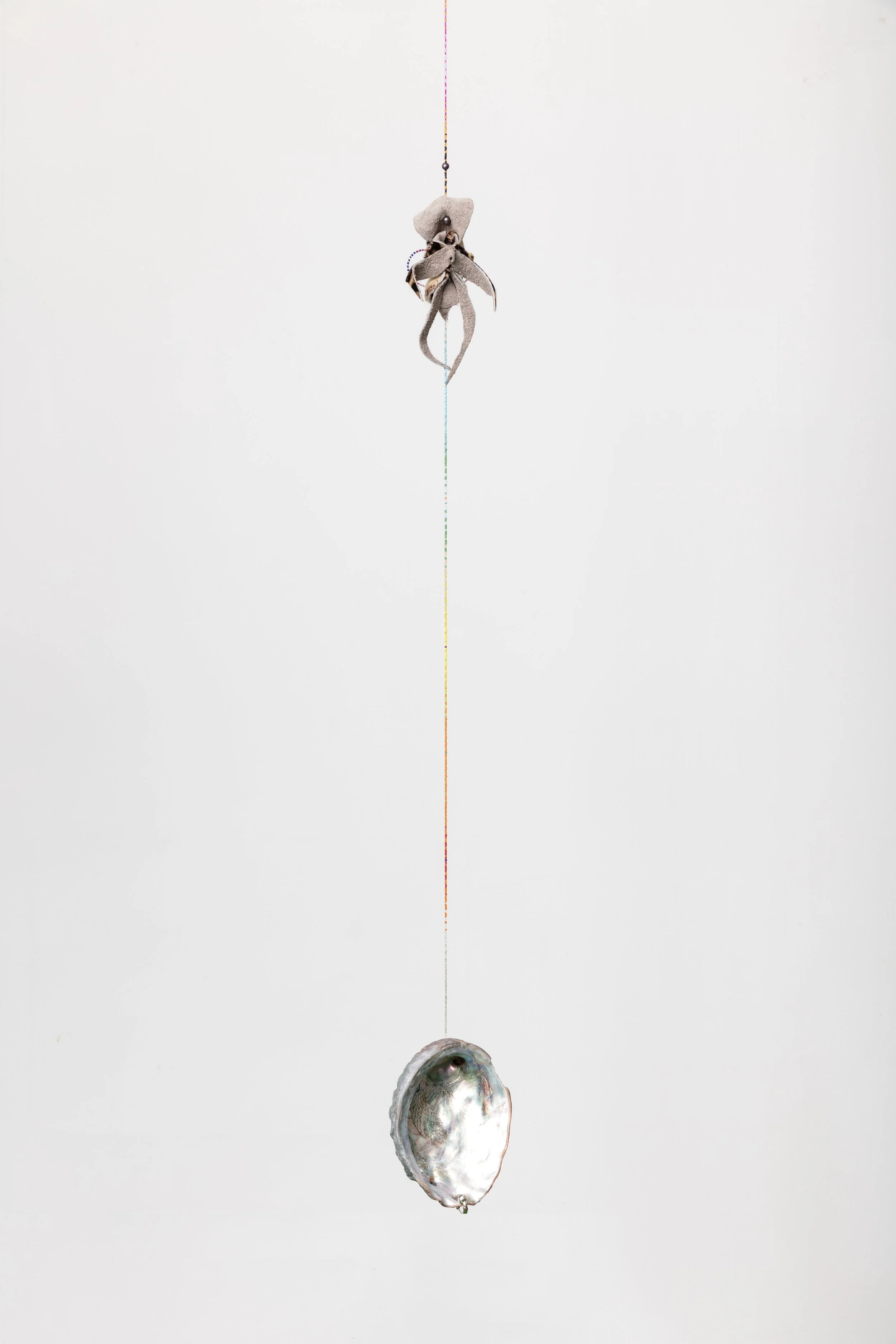
Faerie, Tyler Eash, 2025
Inherited red abalone shell, car paint, varnish, glass seed beads, dentalium, black freshwater pearls, cowhide, thread, and artist’s hoop earring
141 x 121 x 10 cm
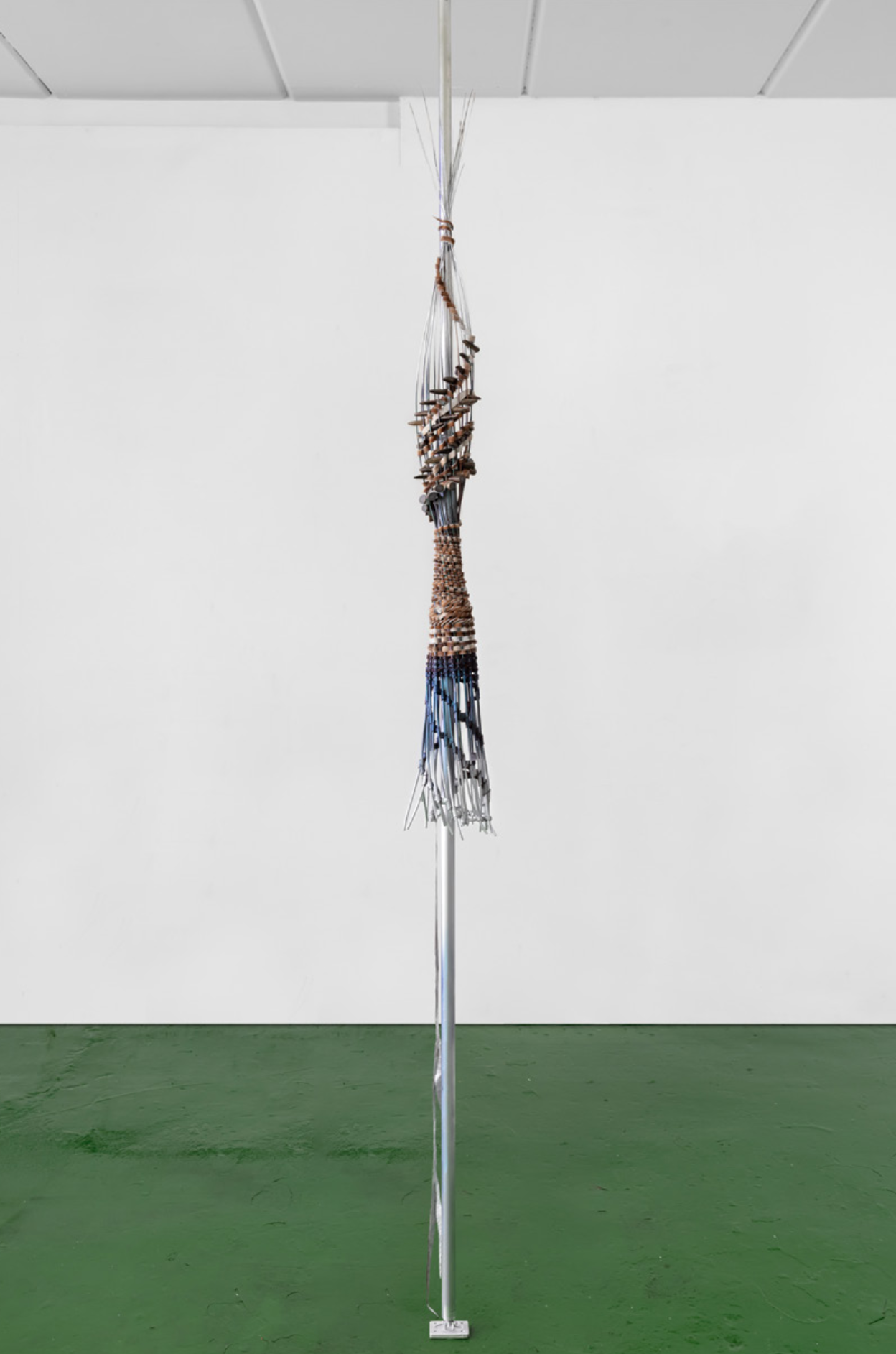
Fagòt, Tyler Eash, 2025
Ceiling support, willow, cowhide, lambskin, Burberry buffalo horn toggles, and car paint
300 x 20 x 20 cm Dimensions variable
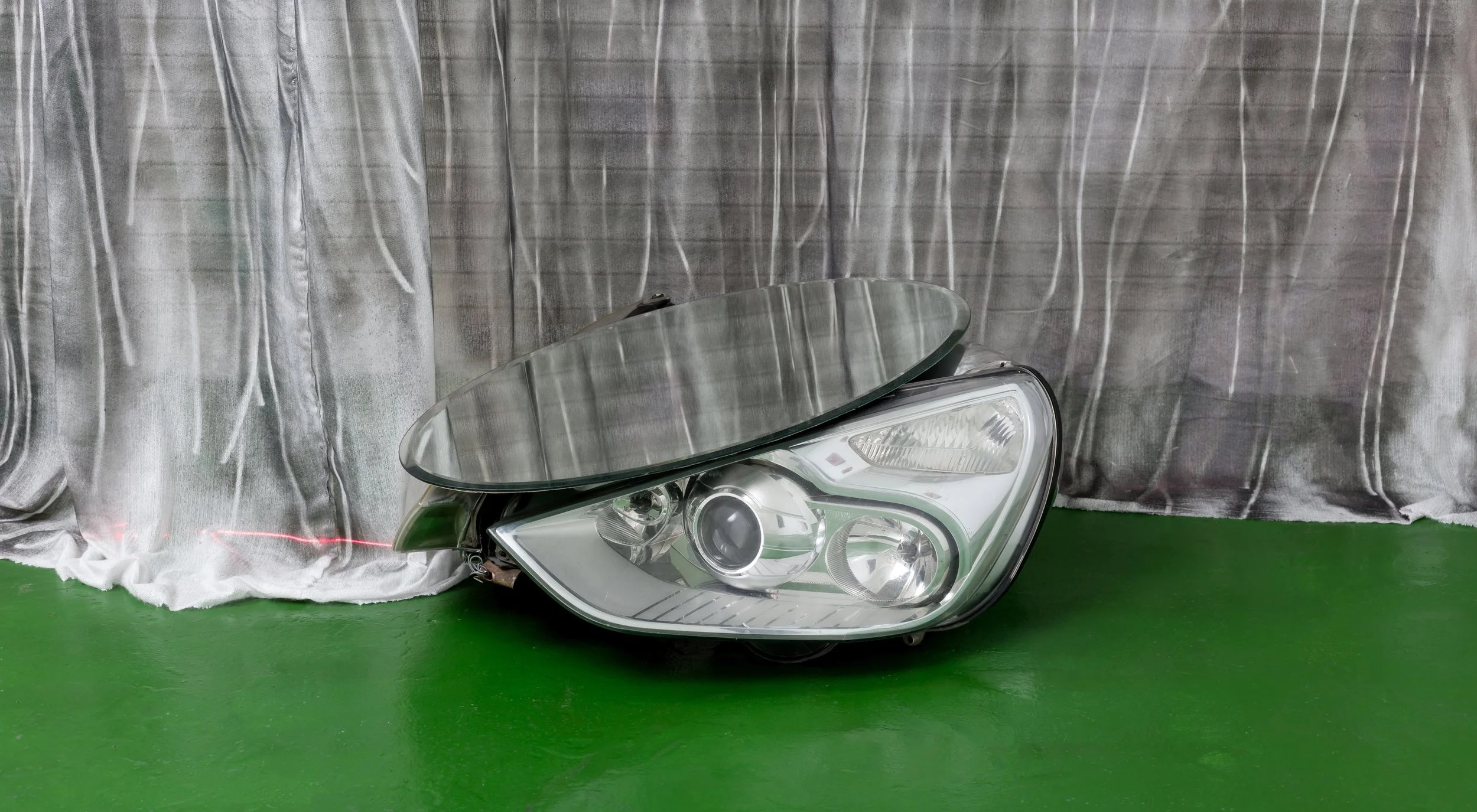
Snake with Secret Name, Tyler Eash, 2025
Car headlights, laser level, mirror, car paint, fabric, Burberry buffalo toggles, cotton thread, leather
300 x 800 x 46 cm
Dimensions variable